The January Numbers That Don't Make Sense
108,000 layoffs. 5,300 new jobs. I've been staring at this ratio, trying to convince myself it's wrong.

In January 2026, U.S. employers announced 108,435 job cuts. They announced plans to hire about 5,300 people. That’s roughly 20 to 1. For every twenty people shown the door, one got a chair.
Layoffs spike for all kinds of reasons. Post-holiday resets. A sector cracking. A few over-levered firms hitting the wall at once. Hiring plans are lumpy too. But this wasn’t a normal lurch. This was the highest January layoffs since 2009, paired with the lowest January hiring on record.
Not the lowest in a decade. The lowest ever tracked.
I kept pulling historical comparisons, trying to figure out if this was just ugly or actually historic. The uncomfortable truth is it’s probably both. And the reason it matters isn’t the number itself. It’s what happens when too many people lose the ability to pay rent, then discover there’s no obvious place to go next.
The ratio is the hook. The story is what that ratio implies about where the jobs are supposed to come from.
The Numbers Behind the Euphemisms
The figure comes from Challenger, Gray & Christmas, which tracks employer-announced layoffs and hiring intentions. Their summary didn’t mince words:
“U.S.-based employers announced 108,435 job cuts in January... LOWEST JANUARY HIRING ON RECORD.”
The acceleration matters as much as the level. Layoffs were up 118% from January 2025. That’s not a cooling. That’s a doubling.
Sector composition makes it concrete. Transportation took 31,000 cuts. Tech and retail were heavy too. The pattern that’s been building for years is accelerating: the modern U.S. economy can shed white-collar and consumer-facing jobs in clusters, even while it claims to be “growing.”
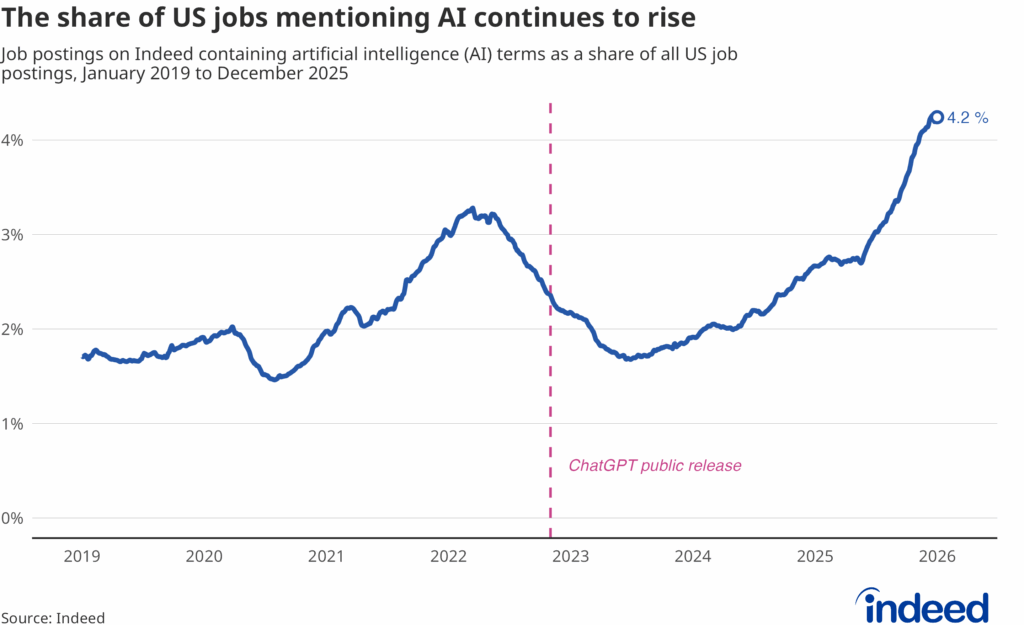
Here’s where it gets slippery. Challenger’s breakdown says only 7% of cuts were officially attributed to AI… about 7,600 jobs. If you take that at face value, you get a comforting story. AI is a footnote. The economy is just digesting higher rates. The labor market will reabsorb people.
But that 7% is corporate language at work. Companies don’t say “we replaced you with a machine.” They say restructuring. They say efficiency. They say streamlining. The cultural commentary around these layoffs is already converging on a different interpretation. One widely shared post captured the mood with a bluntness you won’t find in a press release:
“January 2026 layoffs hitting different: Amazon: 30K... The AI replacement wave is here.”
I’m not treating social media as a statistical source. I’m treating it as a signal about what workers believe is happening behind the euphemisms. When you see a 20 to 1 cut-to-hire ratio and watch the corporate vocabulary dodge the obvious explanation, you should at least consider that the official attribution is understating the mechanism.
Only 7% is what companies are willing to admit. It’s not necessarily what’s true.
The Old Story Is Broken
For more than a century, the reassurance about technological disruption has held up. When a machine takes a job, it creates other jobs. People move up what you might call an abstraction ladder.
Farm laborers moved into factories. Factory workers moved into machine operation. Machine operators moved into supervision, logistics, compliance. The work reorganized, and the next rung usually required more human judgment, not less.
AI breaks that pattern in a way I don’t think we’ve fully metabolized.
Most people imagine automation as replacement of execution: the robot arm replaces the welder, the software replaces the data entry clerk. But modern AI doesn’t just execute. It coordinates. It summarizes. It classifies. It increasingly decides. That’s the oversight layer. That’s the rung people historically climbed to.
The ladder is still there. But AI is sitting on the next rung too.
Here’s the brutal logic that keeps me up at night. Say your core skill is programming. You write scripts for backend systems. AI can now do that, so you pivot to overseeing the AI. But AI is also better at overseeing AI than you are. So you step back again, thinking you’ll orchestrate multiple AIs working in harmony. Except AI is better at orchestration too. You keep retreating up the abstraction ladder, and AI keeps occupying the rungs above you.
At a certain point, you run out of rungs. The biological reality is that human brains operate at roughly 1/1000th the speed of electrical signals. There is no training regimen that fixes that gap. When the work is turning information into other information, the speed differential is fatal.
Goldman Sachs has tried to quantify what this means. Their analysis suggests AI could displace 6% to 7% of the U.S. workforce—roughly 9 to 11 million jobs given current payrolls. Other estimates from McKinsey put 300 million jobs globally at risk. These are forecasts, not counts, but they’re useful for scale. If the displacement is even in the same neighborhood, it’s not a normal churn problem. It’s a political economy problem.
Corporate intent is also shifting from experimentation to replacement. A McKinsey-cited figure says 37% of firms plan worker replacement by 2026. That doesn’t mean they’ll all succeed. It means they’re actively trying, which is a very different world than “AI will just be a tool.”
The near-term pressure is most visible in white-collar knowledge work: finance roles that involve building models, legal work that involves summarizing and drafting, marketing, customer support, internal reporting. Robotics will displace physical work too, but atoms are harder than bits. The factory floor is a brutal environment. The office is not.
This is where the macroeconomic loop starts to look fragile. The modern consumer economy depends on a circular flow. Workers earn wages. Wages fund consumption. Consumption funds revenue. Revenue funds wages. If AI allows firms to keep revenue while reducing wages, the loop can continue for a while, especially if profits concentrate among people who still spend. But if displacement becomes broad and persistent, the loop weakens. Consumption becomes more dependent on credit or transfers. Politics becomes more dependent on resentment.
A social media post that circulated during the January wave framed it in political terms, but the underlying claim is about diffusion. Once a large employer normalizes AI-linked layoffs, others follow.
“Trump economy has a problem... Amazon 16k corporate layoffs due to AI. This is going to spread.”
I’m not endorsing the partisan framing. I’m pointing to the “spread” claim, because it matches how cost-cutting technologies actually propagate. A firm that replaces labor with software lowers its cost base. Competitors feel margin pressure. They copy. The practice becomes industry standard. Then the laggards either adopt or die.
I expected the clearest early warnings to come from the United States, given the size of the tech sector. But one of the most interesting confirmations came from a high-adoption economy that tends to show the future early: South Korea. The Korea JoongAng Daily reported that Korea posted the lowest job growth on record in 2024, with early 2025 seeing 98,000 fewer youth jobs, attributed to AI cutting white-collar finance and IT roles.
I don’t claim South Korea is destiny. I think it’s a leading indicator. When a highly connected, highly educated, tech-forward economy starts to show youth job contraction in precisely the categories AI targets first, it’s hard to dismiss the pattern as a one-off.
What Happens When the Jobs Don’t Come Back
I’m wary of historical analogies because they’re easy to weaponize. You can always find a precedent if you look hard enough. That’s not what I’m doing here.
I’m looking at something narrower: the relationship between mass unemployment and political instability. Not because unemployment automatically produces extremism, but because sustained joblessness creates a specific kind of desperation, and desperate populations become politically plastic. They will try things that used to feel unthinkable.
The pattern across cases isn’t ideological conversion. It’s survival politics. People don’t always vote for extreme options because they’ve read the manifestos. They vote for them because the existing system has failed at the most basic promise a modern state makes: that if you follow the rules and work, you can live.
Tunisia offers a recent, vivid example. Before Mohamed Bouazizi’s self-immolation in December 2010, youth unemployment was approximately 25% to 30%, as reflected in background summaries of the period. Bouazizi’s act didn’t “cause” the Arab Spring by itself. It detonated something already volatile: a large population of young people who could not find dignified work, facing a state that seemed indifferent.
The January labor numbers matter even though they don’t imply 30% unemployment. The danger is that structural labor displacement could push us into a sustained period of elevated unemployment or underemployment, and that politics would reorganize around that fact.
Modern democracies have stronger institutions than Tunisia did in 2010. But it would be complacent to assume the old pattern can’t recur in a new form. Political systems are resilient until they aren’t, and economic separation is one of the few forces that consistently tests that resilience.
The Solutions That Aren’t Simple
Once you accept the possibility of structural displacement, you run into a second problem. The policy solutions that sound simple in slogans become complicated when you try to scale them.
Senator Bernie Sanders has been explicit about one approach. In an October 2025 op-ed, he argued:
“Artificial intelligence and robotics will greatly accelerate productivity. Workers must benefit... through a productivity tax on AI and robotics replacing jobs.”
It’s a clean moral argument. If machines raise output while reducing labor demand, the gains shouldn’t flow only to capital owners. The problem is implementation. What exactly counts as “AI replacing jobs”? Is it a headcount reduction? A wage bill reduction? A productivity jump? Firms can reclassify investments, attribute layoffs to “market conditions,” outsource, shift to contractors, move work offshore. The target is slippery.

Universal basic income is the other major idea, and it’s attractive for a reason. It bypasses the complexity of means-testing. It acknowledges that a society can be productive even when not everyone is needed in traditional employment.
But the evidence from pilots is mixed. The Finnish basic income experiment showed improved wellbeing and reduced stress, but also found that work outcomes were neutral and motivation often declined. A longer-run pattern in UBI studies is consistent: happiness increases, but ambition often decreases, and that can leave hard workers feeling betrayed.
This is the part policymakers rarely address directly. Work is not only income. It’s also status, structure, and meaning. A system that replaces wages with transfers can stabilize consumption, but it may destabilize identity. It can prevent starvation while still producing a crisis of purpose.
There’s a deeper issue here that I think is underexplored. The problem with UBI might be biological, not economic. The human brain wasn’t wired to sit around thinking all day. It was wired to get you to reproduce. And so if you are sitting around all day, presumably not reproducing, the brain will try and get you to do everything humanly possible to get out there and get that quick hit of dopamine. A lot of the time that involves you just feeling quite poorly.
This suggests a different kind of solution, one that preserves the structure of work without requiring traditional economic productivity. Imagine something like a credit-based system where humans reward each other for displays of values we hold dear: courage, bravery, creativity, human connection. Streaming culture is an early, crude version of this. What are streamers actually doing? A lot of the time they just strap a camera on and walk around. They’re satisfying some visceral need for human connection that the market never learned to price properly.
The hunter-gatherer analogy helps here. Transport a hunter-gatherer 10,000 years forward into a modern cubicle and explain that this is how people get paid now. “Where’s the hunting? Where’s the gathering? I don’t see you providing. Where’s the food here, guys?” To them, we’re already doing fake work. A post-AGI economy might look equally strange to us, and might involve activities we don’t currently classify as jobs but that fulfill the same psychological needs.
The challenge is building a bridge from here to there. All these proposals collide with the same foundational issue. Decoupling compensation from market value means rethinking capitalism’s operating logic. That doesn’t make it impossible. It makes it politically explosive.
What I’m Actually Watching
First, whether January’s ratio shows up in the official data. The Bureau of Labor Statistics schedule shows the January payrolls release is scheduled for February 11, 2026. Challenger tracks announcements. BLS tracks actual employment, participation, wages, hours.
Second, whether the 20 to 1 ratio persists or normalizes. One month is an anomaly. A quarter is a pattern. Two quarters is a regime shift. The falsifier is simple. If hiring rebounds to historical norms in Q1 2026, January becomes a shock, not a structural break.
Third, South Korea as a leading indicator. If Korea’s youth job contraction continues in AI-exposed categories, it strengthens the case that what we’re seeing is not U.S.-specific. If it stabilizes, it suggests adaptation is possible faster than pessimists assume.
Fourth, the politics of unemployment and immigration. When labor markets tighten, immigration is an abstract cultural issue. When they loosen, it becomes a concrete economic issue, and rhetoric shifts quickly.
Fifth, corporate language. Do executives keep calling it restructuring, or do they start admitting AI substitution? Attribution shapes legitimacy. If workers believe they’re being replaced by machines while executives deny it, the anger concentrates.
Finally, the geographic shift in employment. AI displacement isn’t the only force in play. Offshoring remains a parallel pressure, and it blends with AI in ways that are hard to disentangle. One widely circulated post framed the cost logic bluntly:
“US TECH JOBS: DOWN 36% FROM PRE-COVID... Offshore GCCs save 60-70%.”
The same thread noted that the “Magnificent 7” added 32,000 India roles while cutting U.S. positions. I treat that as a pattern indicator, not a census, but it fits what multinationals openly pursue: lower-cost global capability centers paired with automation at home. For displaced workers, the distinction between “AI replaced me” and “India replaced me” is academic. The job is gone.
The Part Nobody Wants to Say
The January numbers suggest we may be entering a period where the normal relationship between economic growth and employment breaks down. That’s the core of what I can’t shake.
In the old model, productivity gains were disruptive but ultimately absorptive. Machines raised output, prices fell, demand rose, new industries hired the displaced. Even when the transition was brutal, there was usually a plausible next rung.
In the AI model, the ladder itself is contested terrain.
If AI can do the work and the oversight of the work, then the standard escape route from technological displacement narrows. The optimistic case is that new roles will emerge and offset displacement. I don’t dismiss that. Historically, that’s been the story.
But the tension is obvious. If the new roles are also AI-dominated, or require far fewer humans, then “new jobs” may not mean “new mass employment.” The economy can grow while labor’s share shrinks. That’s a world where GDP stops being a proxy for social stability.
The January data also forces a second tension into view. Only 7% of layoffs were officially attributed to AI, yet the broader pattern suggests AI-driven efficiency is a primary driver. The undercount isn’t necessarily a conspiracy. It’s a function of incentives. Companies have reputational reasons to avoid saying they’re replacing people with machines. But if the public story under-describes the true mechanism, policy will lag reality.
Who benefits is straightforward. Companies that can replace labor costs with AI infrastructure, and economies that move fastest to capture AI productivity gains. Some workers will benefit too, those whose skills complement rather than compete with AI, but defining those skills is increasingly difficult as AI climbs from execution into coordination.
Who gets pressured is also straightforward. White-collar knowledge workers in roles that involve processing, summarizing, or coordinating information. Economies that depend on service-sector employment. Political systems that assume full employment as the baseline. When that baseline cracks, everything built on top wobbles.
The honest answer is that nobody knows yet whether January was an anomaly or the first clean print of a new regime. What would resolve it is a sequence. Do hiring plans rebound? Do payrolls stabilize? Do wages hold? Do new job categories appear that clearly require human capabilities AI can’t replicate?
Those are falsifiers. They’re also the only way out of fatalism.
I don’t know which interpretation is right. The optimistic case requires believing that humans will find new roles faster than AI expands into existing ones. The pessimistic case requires believing that this time really is different, that the biological speed limit of human cognition, combined with AI’s ability to climb the abstraction ladder, breaks the historical pattern.
What I do know is that a 20 to 1 ratio of layoffs to hires is not normal. And the historical record of what happens when too many people lose work too fast is not comforting.
The February numbers will tell us more. I’m not sure I want to see them.