The $3 Trillion Silver Massacre: What Really Crashed the Market
A 47% margin hike triggered the worst day since 1980. While everyone blamed Trump's Fed pick, the real weapon was hiding in plain sight.

Silver didn’t just fall on Friday. It fell through the floor.
In a single session, the price went from roughly $120 to $75-78, a one-day decline of about 31-36%, depending on where you looked. The move was so violent it instantly earned the label “worst day since 1980,” and it wasn’t just silver. Gold fell about 12%, and one estimate put the combined destruction in precious metals market value at $3 trillion to $7 trillion. Mining stocks got crushed right alongside the metals. Leveraged products that promised turbocharged upside delivered something else entirely: a wipeout.
Within hours, a clean narrative formed. President Trump nominated Kevin Warsh to replace Jerome Powell at the Federal Reserve. Warsh is widely seen as hawkish, and markets, so the story goes, repriced the path of rates and the dollar. The dollar strengthened. Algorithms sold. The crowded precious-metals trade broke. End of story.
But that explanation leaves out two details that matter more than the nomination itself.
First, on the same day silver imploded, CME raised silver margin requirements by about 47% to $32,500 per contract, describing it as a “normal review of market volatility.” Second, the London Metal Exchange delayed trading for one hour due to technical issues right as the cascade began.
I’m not arguing the Warsh factor was irrelevant. I’m arguing it was a catalyst, not the weapon. The weapon was mechanical: margin. And if you want to understand why precious metals can look like they’re in a historic bull market one day and a historic crash the next, you have to understand how silver trades, and who gets to change the rules mid-game.
Two Markets, One Metal
Silver is one metal, but it trades like two different assets.
The first is the paper market, dominated by futures. The key point isn’t that futures exist. It’s that futures are designed to be traded with leverage. A commonly cited rule of thumb is that 10:1 leverage is normal in this world, meaning $10,000 can control $100,000 worth of silver. That’s not a moral judgment about leverage. It’s simply how the machine is built.
The second is the physical market: bars, coins, and industrial supply that has to be mined, refined, shipped, insured, and delivered. Physical markets can get tight. Physical markets can get illiquid. Physical markets can get expensive. But physical markets don’t have a broker calling you at 2:00 p.m. demanding you wire cash by the close.
Those two markets talk to each other through price discovery, but they don’t obey the same laws. In paper, the key variable isn’t “do you own silver?” It’s “can you post collateral today?” In physical, the key variable isn’t “can you post collateral?” It’s “can you source metal?”
That’s why margin is such a powerful lever. Exchanges can raise margin requirements when volatility rises. They can do it quickly. And crucially, they can do it knowing exactly what kind of leverage the market is carrying, because they are the ones clearing the trades.
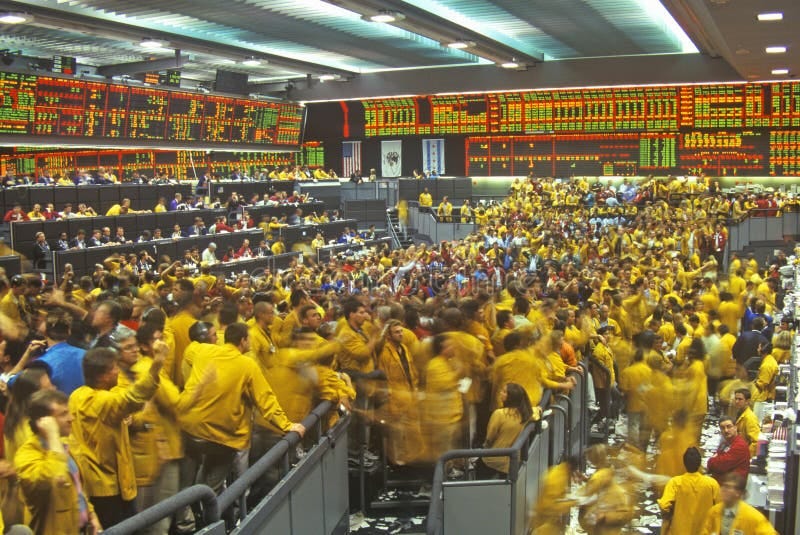
On January 30, CME did exactly that. In an official clearing notice, CME increased silver margins by roughly 47% to $32,500 per contract, calling the change a “normal review of market volatility.” That language is worth sitting with. It’s not presented as an extraordinary intervention. It’s presented as routine risk management.
And I don’t doubt that’s what it is from the exchange’s point of view. When prices swing, the clearinghouse wants more protection. The exchange exists to survive the default of its members. It will always choose its own survival over the comfort of leveraged traders.
But from the trader’s point of view, a margin hike in a fully extended market is a trapdoor. If silver had just run to $120, plenty of participants were likely carrying positions sized for a world where yesterday’s margin rules still applied. When the exchange raises the cash required to hold those positions, traders face a blunt choice: post more cash immediately, or sell.
That’s the vulnerability. When silver hit $120, the trade wasn’t just bullish. It was crowded and levered. And in a levered paper market, the exchange doesn’t have to “ban buying” to break a rally. It can simply raise the price of staying in the trade.
So when Friday came, the conditions were set for exactly what happened next.
The Friday Sequence
The sequence matters because it shows how a market breaks in real time. Not in theory. Not in a textbook. In a chain reaction.
Silver hit about $120-121 on Thursday, January 29, an all-time high. Then Friday arrived with a cluster of events that, taken one by one, might look like noise. Taken together, they look like a spark thrown into a room full of gas.
Start with the most visible headline: Trump’s pick for Fed chair. Warsh’s reputation is not subtle. In a 2009 FOMC context, he said, “I continue to be more worried about upside risks to inflation.” That single sentence captures why markets would read him as a tougher inflation fighter than Powell, or at least as someone less tolerant of letting inflation run.
A hawkish Fed narrative can strengthen the dollar. And the dollar did strengthen, by about 1 percentage point after the nomination, according to market commentary. That’s not nothing. But it’s also not the kind of move that normally explains a 35% collapse in a major commodity in a single session. This is one of the contradictions I kept coming back to: a 1% dollar move supposedly “caused” a 35% silver crash. That’s a mismatch in magnitude.
Then there was the London Metal Exchange. Reuters reported that the LME delayed trading for one hour due to technical issues, then resumed. I’m careful here because “technical issues” can be exactly what it says. Systems fail. Markets are complex. Outages happen.
But timing matters in markets, even when nobody intends it to matter. Liquidity is a fragile thing. A one-hour delay in one of the world’s key metals venues during a moment of stress changes who can hedge, who can offset, and who is forced to act in a thinner market than they expected.
At the same time, CME’s margin move hit. The official notice raised the cost of holding a silver futures position to $32,500 per contract, a roughly 47% increase. If you’re a leveraged trader, that’s not a headline. That’s a direct hit to your balance sheet.
And then the information environment got noisier still. A report circulated about U.S. retreat from critical minerals support, and the Department of Energy pushed back hard, calling it “false and deliberately misleading.” I’m not interested in litigating the policy details here. I’m interested in the market effect of contested information landing in the middle of a leveraged unwind: it adds uncertainty at exactly the moment when participants are trying to decide whether to defend positions or cut them.
Now layer in positioning. Silver had been up about 135% in 2025, and gold up about 66%, according to market analysis. Those numbers are important because they tell you something about psychology. A trade that’s up 135% isn’t just attracting believers. It’s attracting momentum. It’s attracting tourists. It’s attracting leverage. It’s attracting people who don’t want to miss the move.
So you have a market that’s already stretched, a modest dollar rally that can trip systematic selling, an exchange increasing margin, a major venue suffering a delay, and a noisy news environment. In that setup, you don’t need a huge fundamental change to produce a huge price move. You need a trigger that forces liquidation.
That’s what margin does. It turns a “maybe I’ll hold” into a “sell now or default.”
The result was predictable if you understood the mechanism.
The Leverage Flush
A crash like Friday’s is often described as panic. That’s true at the surface level. But underneath, it’s a liquidity event.
When margins rise, leveraged traders face immediate demands. They either add cash or reduce exposure. If they can’t add cash quickly enough, they sell. Selling pushes the price down. The price down increases volatility. Higher volatility increases the likelihood of additional margin calls and forces more selling. That’s the reflexive loop.
In the middle of that loop, stop-loss orders trigger. Risk models tell funds to cut. Brokers tighten terms. Bid-ask spreads widen. The market becomes less a market and more a forced auction.
The retail-facing carnage shows up clearly in leveraged products. One market analysis noted that leveraged silver ETFs dropped 66% during the crash. I wouldn’t call that “volatility.” More like obliteration. It’s also the predictable outcome of leverage layered on top of leverage, in an instrument that’s downstream from the futures market where the margin rules are set.
Then there’s the second-order damage: miners.
One estimate had gold miners down about 12%, and the Global X Silver Miners ETF down nearly 15%. This is another contradiction worth staring at. A mining company didn’t lose 15% of its ore body in a day. A mine didn’t suddenly produce 15% less metal because a central banker got nominated. The physical reality of mining didn’t change in a single session.
But miners trade as financial assets, and in a liquidation, correlations go to one. If silver is being liquidated in paper, miners get treated like a levered proxy for silver, regardless of whether their underlying physical asset base has changed.
Who benefits from a leverage flush? It’s rarely the people who bought late with leverage. It’s often the people who can survive the volatility, and the people positioned to take the other side of forced selling.
There’s a long-running pattern in precious metals commentary that banks, often named explicitly, are structurally on the short side in paper markets. In this episode, claims circulated that JP Morgan covered short positions at the exact market bottom. I’m not treating that as established fact. The specific positioning of major banks at the moment of the crash remains genuinely unclear in public view, and the market is full of narratives that flatter whoever is telling them.
But the pattern doesn’t require a perfectly timed villain. The pattern only requires that there are large, well-capitalized players who can withstand margin hikes and volatility, and that there are over-levered players who cannot. In that world, a margin hike acts like a sorting mechanism. It transfers exposure from weak hands to strong hands at lower prices.
But here’s what the crash didn’t change.
The Shortage That Didn’t Go Away
The paper market can do a lot. It can set the headline price. It can liquidate leverage. It can reset positioning. What it cannot do is manufacture physical silver.
The underlying supply-demand picture that helped drive silver to $120 didn’t vanish on Friday. One analysis, citing the Silver Institute through a Kotak framing, described a fifth consecutive year of silver supply deficits on the order of 200-230 million ounces annually, totaling roughly one billion ounces over five years. That’s a structural gap between what the world uses and what the world produces.
And the demand side isn’t just speculative. Industrial demand is tied to sectors that don’t care what COMEX did on Friday afternoon. A market overview of demand trends points to silver’s role in solar panels, electric vehicles, and AI data centers. Those are not fads in the way meme trades are fads. They’re multi-year buildouts backed by policy, capex, and infrastructure.
The most vivid illustration of the paper-physical split showed up in China. Before the crash, Shanghai physical silver premiums reportedly reached record highs of $9-20 or more above spot. That’s a loud signal. It says: in at least one major physical hub, buyers were willing to pay far above the paper price to get real metal.
This is the third contradiction that matters: Shanghai premiums at record highs while COMEX prices crash. Those two things can coexist because they are expressions of different constraints. The paper market is constrained by collateral and leverage. The physical market is constrained by inventory and delivery.
If you’re an industrial buyer, a paper crash can even increase urgency. A lower spot price might stimulate demand, but only if metal is available. If premiums stay high, it suggests availability is the bottleneck, not price.
Banks and exchanges can lean on paper. They can’t print silver. They can’t conjure bars out of a margin spreadsheet.
This isn’t the first time this playbook has run.
The Playbook
If Friday felt like a once-in-a-generation event, it’s worth remembering that precious metals have a long history of being “once-in-a-generation” right up until the next time.
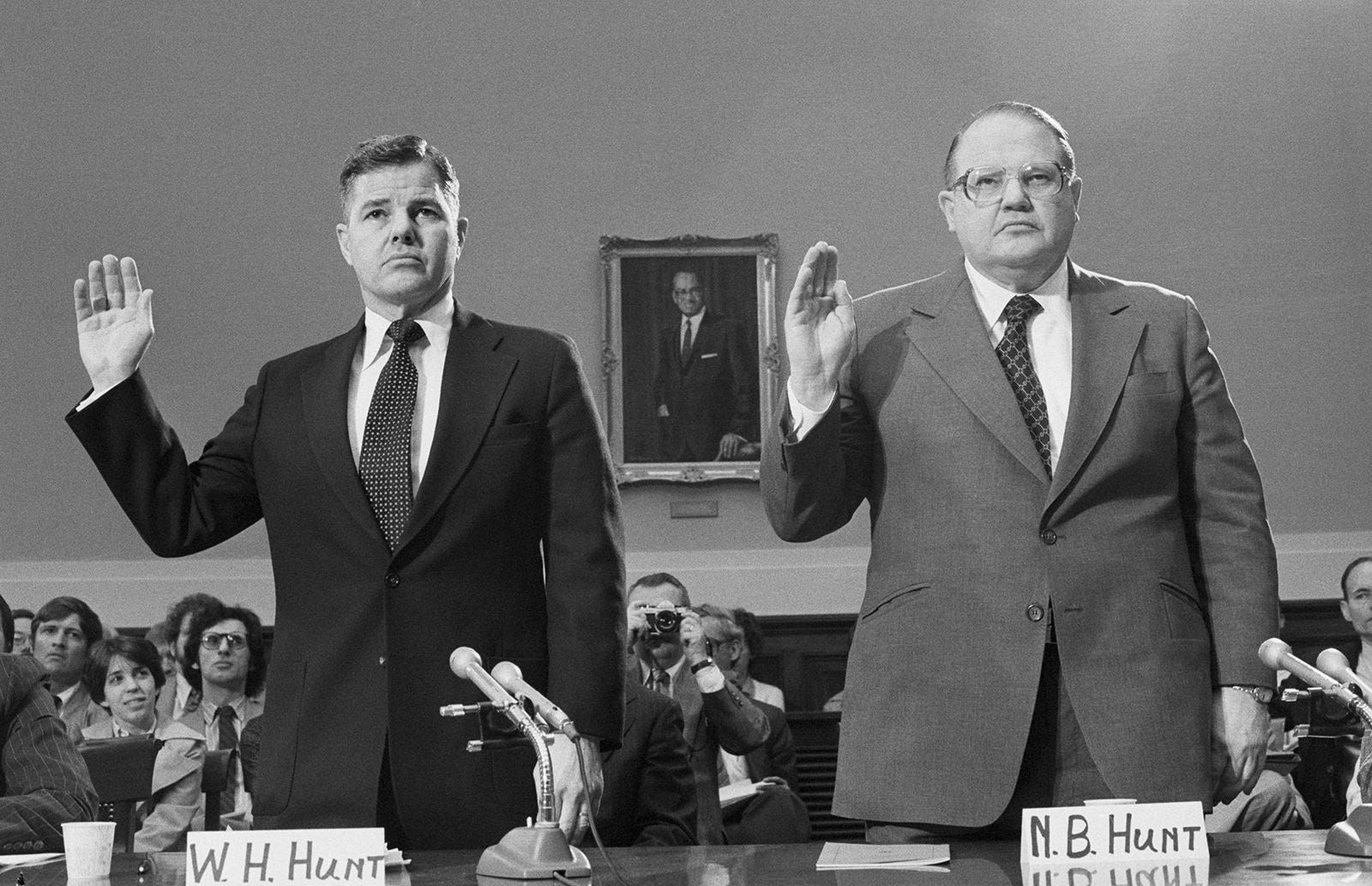
The original modern template is 1980. The Hunt brothers famously attempted to corner the silver market, driving prices toward $50. According to a historical summary, COMEX invoked “Rule 7,” shifting to liquidation-only trading. The effect was catastrophic: an 80% crash and a recovery that took years. The details of that era are often debated, but the mechanism is familiar: change the rules of engagement when the market is stressed, and the most levered participants get wiped.
Then 2011. Silver ran to about $49 in a post-crisis environment characterized by distrust in banks and a hunger for hard assets. An analysis noted that CME raised margins five times in two weeks, and silver fell about 48%, followed by a multi-year recovery. Again, the story isn’t that margin hikes “caused” the end of the bull market. The story is that margin hikes are a reliable accelerant when leverage is high.
Then December 2025, which matters because it shows how recent and repeatable this is. A report described silver peaking around $84, followed by CME hiking margins twice during thin holiday trading, triggering a 13-16% drop to roughly $72, with a relatively quick rebound afterward. Thin liquidity plus margin pressure is a familiar recipe.
January 2026 looks like the same mechanism at larger scale. Silver had climbed further. The positioning looked more extreme. The margin move was larger. The result was correspondingly violent.
The open question now isn’t whether the playbook exists. It’s whether the recovery follows the “weeks” pattern or the “years” pattern.
That remains genuinely unclear because it depends on what was driving the move to $120 in the first place. If the move was mostly speculative leverage, the flush can end the cycle. If the move was anchored in structural industrial demand and persistent physical deficits, the flush can simply reset paper positioning before the underlying squeeze reasserts itself.
I have a view, but I hold it loosely: the physical signals, like the magnitude of multi-year deficits and the Shanghai premiums, suggest the story is not purely speculative. But markets can stay dislocated longer than people expect, especially when the paper mechanism is designed to punish leverage.
What It Means
I don’t think Friday’s crash was a market failure. I think it was a mechanism working exactly as designed.
The mainstream narrative blamed a Fed nomination. That’s a convenient explanation because it’s legible. It gives you a villain, a storyline, and a macro frame. But the more important force was mechanical: margin hikes in a highly levered paper market. When CME raised silver margins by about 47% to $32,500 per contract, it effectively repriced the right to stay long silver futures. That’s not a commentary on whether silver is scarce. It’s a commentary on whether traders can fund their exposure.
This reveals a structural tension in precious metals: paper mechanisms can reset positioning at will, but they can’t solve physical shortages. A margin hike can force liquidation, knock the price down, and allow crowded longs to be replaced by better-capitalized players. It can also give relief to shorts who were suffering as prices rose.
Who benefits in this kind of flush?
Large, well-capitalized participants who can survive volatility and buy into forced selling. Entities with large short exposure that can use the downdraft to reduce risk, whether by covering or rolling positions. Exchanges and clearinghouses, which are doing what they exist to do: manage default risk through higher collateral demands.
Who gets pressured?
Leveraged traders, retail and institutional. The 66% drop in leveraged silver ETFs is the cleanest illustration of who gets destroyed first. Mining equities, which fell roughly 12-15% even though their physical assets didn’t evaporate. In a paper liquidation, miners trade like derivatives, not like businesses. Anyone who confuses the paper price with the physical reality, and assumes the two must always move together.
Three uncertainties matter going forward.
First, whether the timing of the margin hikes, the LME outage, and the news flow was coordinated or coincidental. The honest answer is that nobody knows yet, and proving coordination would require internal communications or regulatory findings that rarely surface quickly. What would resolve it is straightforward: documented evidence of intent, not just suspicious timing. Until then, the more robust conclusion is that the system is fragile enough that coincidence can look like design.
Second, whether the recovery takes weeks, like December 2025, or years, like 2011. What would resolve it is not rhetoric, but price behavior over the next 60 to 90 days, and whether physical indicators stay tight.
Third, the specific positioning of major banks at the time of the crash. Claims about perfectly timed covering are easy to make and hard to prove. What would resolve it is detailed positioning data and post-event disclosures that map who reduced risk and when.
For readers trying to make sense of the divergence between chaos on screens and tightness in the real world, I keep coming back to a simple framework: watch the physical tell.
Four things are worth tracking.
Shanghai physical premiums. If premiums collapse to match COMEX, that’s a tripwire that the shortage narrative is weakening. If they stay elevated, the physical market is telling you the paper flush didn’t fix the underlying constraint.
Recovery speed. A fast rebound would suggest the flush was a positioning reset. A long, grinding recovery would suggest the paper market successfully broke the cycle.
CME margin levels. If margins stay elevated, leverage will stay suppressed, and rallies will be harder to finance. If margins normalize, the leverage machine can re-engage.
Industrial demand trends in solar, EVs, and data centers. If those sectors slow materially, the structural bid weakens. If they keep growing, physical tightness can persist even through paper volatility.
The mechanism isn’t hidden. It’s documented. It’s been used in 1980, in 2011, in December 2025, and now again in January 2026. The same tools produce the same outcomes because the incentives don’t change. Leveraged traders chase momentum. Exchanges raise margins when volatility spikes. Shorts get relief when forced selling hits.
The only variable is recovery speed, and that depends on whether the demand driving prices is speculative or structural.
Solar panels still need silver. Data centers still need silver. The question isn’t whether the playbook worked. It’s whether the shortage that drove silver to $120 cares about what happened on paper.
Physical silver doesn’t get margin calls.