The $1.25 Trillion Merger That Moves AI Off Earth
How the SpaceX-xAI deal is a bet that the AI infrastructure bottleneck will be solved in orbit, not on Earth

On February 2nd, SpaceX and xAI announced they were merging at a combined valuation of $1.25 trillion. The financial press focused on the number. I kept thinking about something Musk said at Davos a few weeks earlier: “The lowest cost place to put AI will be in space.” True within two to three years, he claimed. That’s an extraordinary statement. It means the entire premise of the current AI infrastructure buildout. Hyperscale data centers, nuclear plant revivals, billions poured into terrestrial power… might be solving yesterday’s problem.
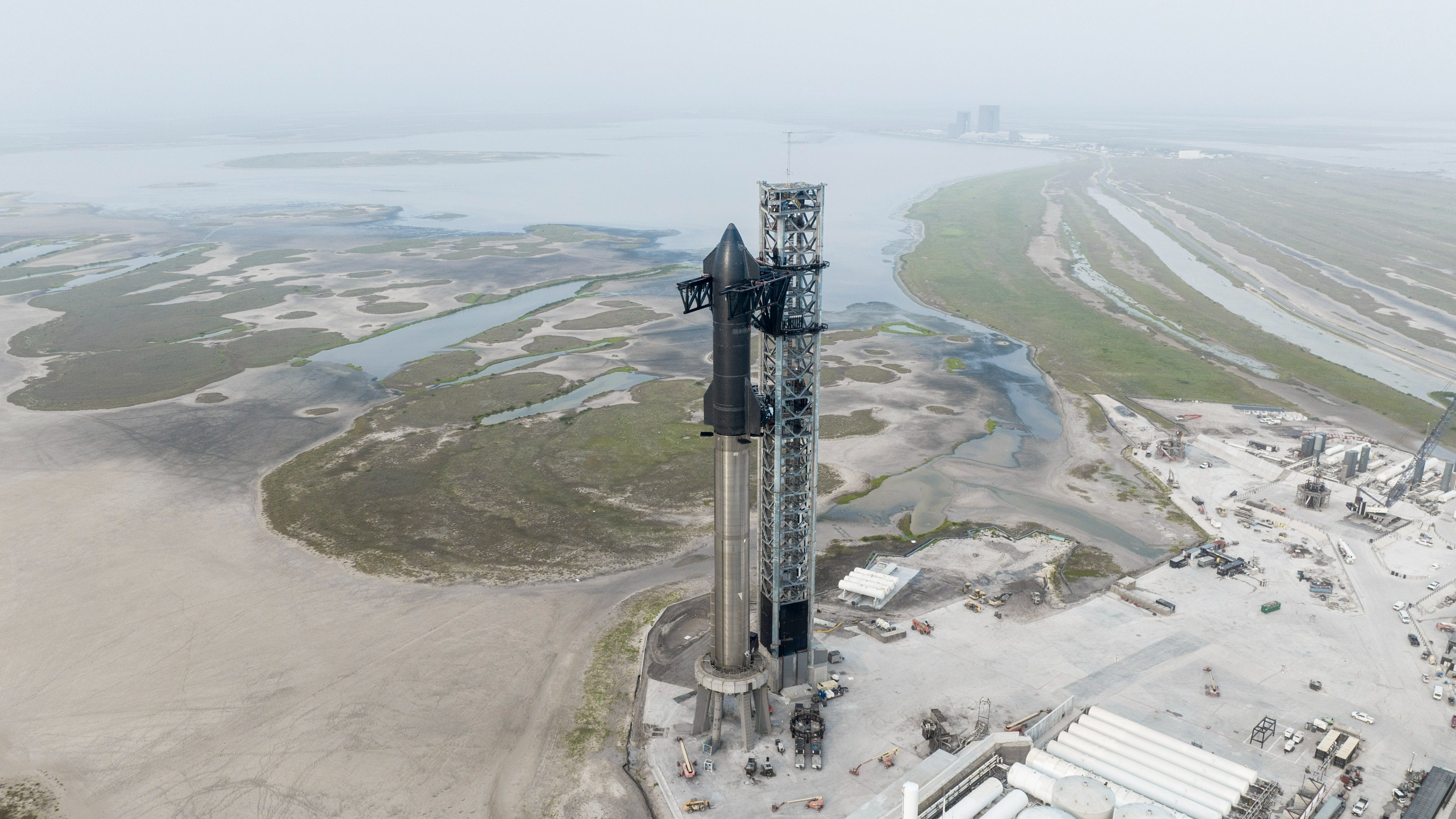
The Physics Case for Orbital Compute
The AI boom has a dirty secret: the constraint isn’t imagination. It’s power and heat.
On Earth, data centers are not just buildings full of chips. They’re industrial systems that convert electricity into computation and then into waste heat. The larger the model, the more brutal the arithmetic becomes. You need reliable generation, high-voltage transmission, local substations, backup, cooling towers or chillers, water rights in some regions, and a permitting process that invites every local grievance into the timeline. Even when the economics pencil out, the politics often don’t.
The clearest illustration of how tight this has become is the way big tech is reaching backward into the last century for electrons. Microsoft’s move to revive the Three Mile Island nuclear plant specifically to supply power for AI workloads is the kind of headline that would have sounded like satire five years ago. It isn’t. It’s a signal that the “just build more data centers” phase is running into the hard edges of the terrestrial system: generation constraints, transmission constraints, community resistance, and time.
That’s the Earth-bound picture. Now put the same problem in orbit.
In space, the energy source is brutally simple: the sun. In orbit, you get about 1,400 watts per square meter of solar power. No clouds. No weather. No seasonal haze. And in certain orbital regimes, you can make the supply far more continuous than anything you can get on the ground without massive storage.
The most important part isn’t just the wattage. It’s the predictability. Terrestrial renewables are cheap but intermittent, which forces the system to pay for redundancy: storage, peakers, overbuild, transmission, and grid services. In orbit, the “fuel” arrives on schedule.
Then comes the second half of the physics case: cooling.
Cooling is where Earth data centers become infrastructure monsters. You can’t cheat thermodynamics. Chips generate heat. Heat has to go somewhere. That “somewhere” on Earth is usually a complex dance between air, water, refrigerants, and mechanical systems that add cost, add points of failure, and add permitting headaches.
In orbit, the environment is cold in a way that’s hard to fully internalize if you’ve never had to think about it. Space is not “cold air.” It’s near vacuum, which changes the cooling problem. You’re not dumping heat into a fluid like air or water. You’re radiating it. That’s a real engineering challenge, but it also opens a door: passive radiative cooling as a primary design principle, not an auxiliary system. Done well, you’re not paying for the same mechanical complexity that defines terrestrial cooling.
Add in the non-physics constraints that dominate Earth projects and the picture gets sharper. In orbit, there’s no land acquisition. No zoning board. No NIMBYism. No local moratorium because the county decided data centers are consuming too much water. No multi-year queue to get a grid interconnect study approved. If you can launch hardware and keep it operating, you’ve bypassed a huge portion of the friction that makes Earth-based compute so slow to scale.
This is why Musk’s Davos line matters. He wasn’t making a vague futurist claim about “space.” He was making a cost claim, anchored to a timeline:
“The lowest cost place to put AI will be in space... true within 2 years, maybe 3.”
The honest tension is that the timeline is doing a lot of work. Space-based data centers have not operated at commercial scale. Nobody has proven the full-stack economics: launch, power, thermal management, radiation hardening, maintenance, replacement cadence, and the operational reality of running compute workloads where you can’t send a technician with a wrench.
Still, the physics argument is coherent enough that I can see why it would pull capital toward it. If you believe the compute bottleneck is the real bottleneck, then the cheapest scalable energy and cooling regime wins. And if that regime is orbital, the AI race starts to look less like a model contest and more like an infrastructure contest.
The physics might favor space. But physics doesn’t build anything. Infrastructure does.
What SpaceX Actually Controls
I’ve found it’s easy to talk about “space compute” as if it’s a single invention waiting to be discovered. In practice, it’s a supply chain plus a launch cadence plus a constellation architecture. This is where SpaceX stops being a rocket company in the conventional sense and starts looking like the only vertically integrated logistics platform that could even attempt something like this.
Start with the cost curve. Falcon 9 reusability reduced launch costs by up to 80%, taking the approximate cost to low Earth orbit from about $20,000 per kilogram to roughly $2,700 per kilogram. That’s not a marginal improvement. It’s the difference between “only governments can do this” and “a private company can iterate hardware in orbit.”
Then look at the footprint already in space. As of late January 2026, SpaceX had launched more than 11,000 Starlink satellites. That number is hard to hold in your head. It means SpaceX doesn’t just know how to launch payloads. It knows how to manufacture satellites at scale, deploy them, operate them, and replace them. It has a living industrial system in orbit.
Next comes the near-term upgrade path. Starlink’s roadmap points to Starlink V3 satellites expected to begin launching in the first half of 2026, with 1 terabit per second capacity and references to edge computing capability. The phrase “edge computing” is doing important work here. If you’re serious about orbital compute, you don’t just need power and cooling. You need bandwidth, routing, and an architecture that can actually run workloads rather than merely relay data.
Finally, there’s the scale ambition implied by SpaceX’s valuation trajectory. In December 2025, SpaceX set an $800 billion valuation in a tender offer priced at $420 per share. Weeks later, the merger terms implied $1 trillion for SpaceX inside the combined entity. Valuations aren’t proof of capability, but they do signal what markets believe the platform could become.
Put those pieces together and SpaceX looks less like a bet on a single product and more like a bet on a manufacturing and deployment machine: cheap launch, mass production, a giant constellation, and a roadmap that hints at compute moving closer to the network itself.
SpaceX has the rockets and the satellites. xAI has the models burning through compute. The merger puts them together.

Why xAI Needed This
xAI’s story over the last year reads like the story of the entire AI sector, compressed.
In January 2026, xAI announced a $20 billion Series E that valued the company at $230 billion, up from $50 billion a year earlier. That kind of velocity is not just a sign of investor enthusiasm. It’s a sign of capital intensity. The market is effectively pre-paying for compute, talent, and infrastructure that doesn’t exist yet at the needed scale.
The deeper issue is that AI demand is not growing linearly. The Semiconductor Industry Association’s research puts a number on what many engineers already assume: AI compute demand is projected to grow 100 to 1000 times over the next five years. Even if you think that range is too wide, the direction is the point. If demand rises by even the low end of that band, the world has to build an energy and cooling system that looks nothing like the current one.
This is where the merger begins to look less like empire-building and more like a supply-chain lock.
If you’re xAI, you can buy GPUs and rent cloud capacity, but you’re ultimately competing in a world where the limiting reagent is electricity and cooling. You can sign power purchase agreements. You can lobby for grid upgrades. You can even do what Microsoft did and tie yourself to a nuclear plant revival. But you’re still living inside Earth’s constraints: permitting, interconnects, local politics, and long construction timelines.
SpaceX offers a different escape hatch: don’t fight the grid. Bypass it.
Before the merger, the financial linkages were already being built. Tesla and SpaceX each invested $2 billion in xAI. That’s an unusual pattern. It’s not just a founder moving money between pockets. It’s two capital-intensive companies effectively underwriting a third capital-intensive company’s compute future.
If you assume Musk’s Davos claim is even directionally right, xAI’s strategic problem isn’t only “how do we train the next model?” It’s “how do we secure the cheapest scalable compute environment before everyone else realizes where the bottleneck is moving?”
The merger happened fast. The paper trail shows just how fast.
The Paper Trail
I don’t think you can understand this deal by starting with the February 2 announcement. You have to start with how quickly the idea moved from public speculation to legal structure.
On January 10, Chamath Palihapitiya publicly predicted SpaceX wouldn’t go public the normal way. His view was blunt:
“SpaceX will not go for IPO... reverse merger with Tesla more likely”
That prediction matters less as prophecy than as a window into how sophisticated market participants were already thinking about the mechanics. SpaceX is too strategically sensitive, too politically entangled, and too valuable to be a normal IPO story.
By January 21, Nevada merger subsidiary LLCs had been filed listing SpaceX CFO Bret Johnsen as managing member. That’s the kind of detail that doesn’t show up in hype cycles. It shows up when lawyers and bankers are doing real work.
On January 28, Tesla’s Q4 call disclosed the $2 billion xAI investment, and the company also signaled a major manufacturing shift by announcing it would end Model S and X production after Q2 2026. That same day’s news cycle made it clear the Musk ecosystem was moving money and capacity around with a purpose, not just with vibes.
On January 29, Bloomberg reported SpaceX was considering a merger with Tesla or xAI or both. By January 30, Palihapitiya was discussing structure in public with the kind of specificity that suggests the market’s “how would this work?” phase was already over. He wrote:
“Equity swap... MS or GS to run auction... cleaner than [SpaceX] IPO.”
Then, on February 2, Bloomberg reported the outcome: SpaceX and xAI combining at $1.25 trillion, with SpaceX at $1 trillion and xAI at $250 billion.
The speed is the story. In less than a month, the idea moved from “reverse merger speculation” to entity filings to a finalized combination. Whatever you think of Musk, this is what it looks like when a founder treats corporate structure as an engineering problem: pick a target architecture, then execute.
The xAI merger happened. Tesla didn’t. That’s not an accident.
Why Tesla Wasn’t Included
The simplest explanation for why Tesla didn’t roll into the SpaceX-xAI structure is that a SpaceX-Tesla combination would be a regulatory and geopolitical nightmare.
Tesla is not just an American car company with a factory in China. It is, in a production sense, deeply exposed. Tesla’s Shanghai Gigafactory delivered 851,000 vehicles in 2025, representing about 52% of Tesla’s global output. That’s the number you can’t talk your way around. More than half.
SpaceX, meanwhile, is not just a private launch company. It plays a national security role, with a relationship to the U.S. government that is structurally different from Tesla’s consumer-facing business. Any combination that pulls a China-dependent manufacturing base into the same corporate entity as a company with sensitive U.S. defense relationships invites scrutiny, not just from investors but from the state.
CFIUS is the obvious choke point. A SpaceX-Tesla merger would raise questions about foreign ownership exposure, supply chain entanglements, and how influence could travel inside a combined entity. And the political environment is already primed for suspicion. There has been a Senate push asking the Pentagon to probe SpaceX over potential Chinese backdoor investments. Even if nothing comes of it, the fact that the request exists tells you the scrutiny is real.
Markets seemed to understand this constraint in real time. Polymarket odds put a 48% probability on a SpaceX-xAI merger versus 18% for SpaceX-Tesla. Prediction markets aren’t truth machines, but they are often decent thermometers for “what will regulators tolerate?”
So Tesla stayed outside the formal merger. That doesn’t mean Tesla is irrelevant to the broader architecture. It means the integration is happening through other channels.
The Broader Consolidation
If you want to see the Musk ecosystem consolidating, you have to look at capex, production lines, and the way companies are repurposing themselves.
On Tesla’s Q4 2025 earnings call, CFO Vaibhav Taneja put a number on the company’s 2026 buildout. He stated:
“CapEx expected to exceed $20 billion”
That’s not routine spending. That’s a company retooling for a different product mix.
Musk was even more explicit about what the factory floor is being turned into. He described the plan this way:
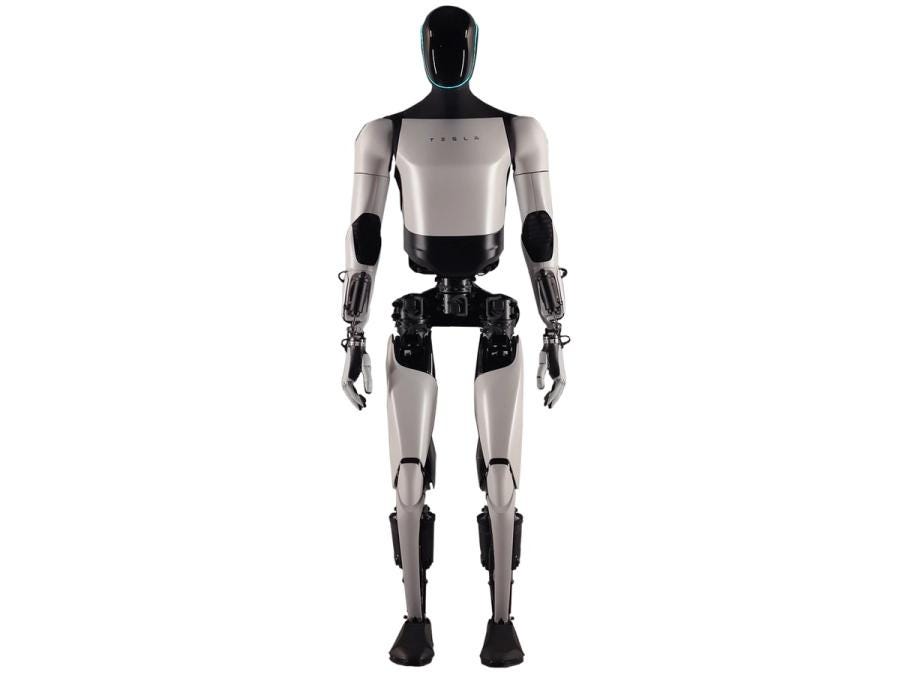
“Replacing S/X lines with 1 million unit per year line of Optimus”
A million units per year is not a pilot program. It’s an industrial commitment. And it matters for the SpaceX-xAI story because it hints at the downstream demand for inference and autonomy. Robots and vehicles don’t just need a model once. They need continuous improvement, updates, and a compute substrate that can serve both training and inference at scale.
There’s also the question of capability. Tesla FSD successfully completed a full coast-to-coast drive with zero interventions. I treat any single demonstration cautiously, because autonomy is a domain where edge cases are the whole game. But the reason it’s relevant here is that it shows Tesla pushing toward a world where software and compute are the product, and the car is the hardware shell.
Even without a formal merger, the financial linkages are already there. Tesla and SpaceX each putting $2 billion into xAI is a way of binding the ecosystem together without triggering the most obvious regulatory tripwires. It’s consolidation by capital flow rather than consolidation by cap table.
The Bull and Bear Cases
I’ve found that the same set of facts can support two completely different narratives here, and the only way to stay honest is to hold both in your head.
The bull case is vertical integration, but not in the usual “synergies” sense. It’s vertical integration across the bottleneck layers of the AI era: launch, satellites, connectivity, compute, models, and then deployment into vehicles and robots. In that view, the SpaceX-xAI merger is less about saving xAI money today and more about securing the right to build tomorrow’s cheapest compute substrate.
That’s why Eric Berger’s line resonated. Looking at the combined structure, he described the entity as:
“Combined company would be a vertically integrated AI colossus”
If space-based compute works, that phrase is not hyperbole. It’s a description of control over the infrastructure layer when compute becomes mobile and orbital.
The bull framing also borrows from an older idea: conglomerates as capital allocation engines. Palihapitiya put it in a memorable phrase when discussing the broader consolidation logic. He called it the:
“Berkshire Hathaway of the modern century”
That’s not an argument that the companies are similar operationally. It’s an argument that the structure could become a compounding machine, with cash-flowing businesses funding moonshots, and moonshots turning into cash-flowing businesses.
Some analysts are already modeling outcomes in that direction. Ramp Labs projected $49 billion in revenue by 2028 and a $2.5 trillion valuation at a 50x multiple. I treat this as evidence of how far the upside narrative can stretch if you assume execution and a favorable infrastructure shift.
Now the bear case, which is not trivial.
Space data centers are unproven at commercial scale. Not “unproven like early EVs were unproven.” Unproven in the sense that the entire operational model is different. Radiation exposure. Space debris risk. Maintenance constraints. Replacement cadence. The difficulty of upgrading hardware when your hardware is moving at orbital velocity. Even if you can launch cheaply, you still have to make the unit economics work across a lifecycle.
Then there’s the timeline problem. Musk’s Davos claim is aggressive. He said orbit would be the lowest cost place for AI within two to three years. Even sympathetic observers will admit that Musk’s timelines have a history of slipping. The world has heard big promises before, including ambitious autonomy timelines that didn’t materialize on schedule. The bear case isn’t “he never delivers.” It’s “he delivers later than the window that matters.”
And timing matters because the terrestrial incumbents aren’t standing still. Microsoft is reviving nuclear capacity for AI. Amazon and Google are building massive data center footprints. If orbital compute is five to six years away rather than two to three, Earth-based infrastructure could entrench itself long enough to blunt the advantage.
This is where the story gets genuinely uncertain. The merger can be read as a strategic masterstroke or as an expensive consolidation of risk. The difference between those interpretations isn’t ideology. It’s whether orbital compute economics work, and whether they work soon enough to matter.
What It Means
I don’t think the SpaceX-xAI merger is primarily about consolidating Musk’s empire, even though it obviously does that. I think it’s a bet on a specific theory: the AI compute bottleneck will be solved in space, not on Earth.
If that theory is right, the advantage isn’t incremental. It’s structural. The cheapest compute environment becomes the one with constant solar input and a thermal regime that doesn’t require Earth’s cooling infrastructure. The winners are the players who can get hardware into orbit cheaply, operate it reliably, and integrate it into a network and software stack that can actually use it.
That is why SpaceX matters. The company is already operating a massive constellation of 11,000+ satellites, and it has already bent the launch cost curve, taking costs down from about $20,000/kg to $2,700/kg to low Earth orbit. If compute moves off Earth, launch and orbital operations stop being a supporting industry. They become the infrastructure layer.
If the theory is wrong, or simply late, the merger looks different. Then it starts to look like an expensive consolidation of losses: xAI’s compute hunger paired with SpaceX’s capital intensity, wrapped in a valuation that assumes the future arrives on time.
This is also where the Tesla question stays alive. Full vertical integration, in the maximal bull case, would eventually pull Tesla’s manufacturing and robotics into the same strategic orbit. But the 52% China production exposure is a real barrier given SpaceX’s national security role and the existing political scrutiny around Chinese influence concerns. The honest answer is that nobody knows whether that barrier is permanent or just a timing issue. What would resolve it is not a tweet or a rumor, but a change in the regulatory and geopolitical environment that makes such a combination tolerable.
For the rest of the market, the pressure point is clear. Hyperscale cloud providers and AI labs betting everything on terrestrial data centers are making a massive assumption: that the endgame for compute is on the ground. If orbital compute becomes cheaper, those investments don’t become worthless, but they do become less defensible as the marginal unit of compute shifts elsewhere.
What to Watch
I’m not trying to time a crisis. I’m trying to watch the system tell the truth.
Starlink V3 launches in the first half of 2026, and whether “edge computing” is real capability or marketing language. Starship cadence ambitions, because orbital compute at scale is ultimately a mass-to-orbit problem. Any announcement of actual inference or training workloads running in orbit, not just discussions about why it might be attractive. Whether the Tesla merger idea resurfaces if the political risks change. Whether Microsoft, Amazon, and Google begin to treat space infrastructure as a serious capital allocation category rather than a curiosity.
Musk has a pattern. He makes claims that sound absurd, misses his own timelines, then delivers something that changes an industry. Reusable rockets. Mass-market EVs. Global satellite internet. The question with orbital AI isn’t whether he’s attempting something unprecedented. He clearly is. The question is whether the physics and engineering actually work on a timeline that matters.
We’ll know more when Starlink V3 launches. We’ll know more when someone runs actual inference in orbit. Until then, this is a $1.25 trillion bet on a theory.
The theory might be right.