America’s Energy Misdirection: Chasing Oil While the Gas Runs Out
The US pulled off a military operation to secure Venezuelan oil last month. But the real energy bottleneck is somewhere else entirely.

On January 3, 2026, US special forces captured Nicolás Maduro in Caracas. The White House called it a “remarkable foreign policy triumph,” with President Trump praising the “bold capture and extradition of Nicolas Maduro, the indicted narcoterrorist.” Markets read it as an oil play: unlock Venezuela’s reserves, the largest proved crude reserves on Earth, and flood the world with cheap barrels. Lower prices. Lower inflation. Strategic leverage restored.
There’s a problem with that theory. Oil isn’t the bottleneck anymore.
While Washington was planning regime change for a commodity with roughly 5 million barrels per day of spare capacity sitting in OPEC warehouses, the fuel that actually keeps American lights on, powers every AI data center being built, and gets shipped to a desperate Europe as fast as we can liquefy it is natural gas. And natural gas has no OPEC. No spare capacity. No cavalry.
The US is walking into three simultaneous demand shocks for natural gas at the same time, and almost nobody in Washington is talking about it.
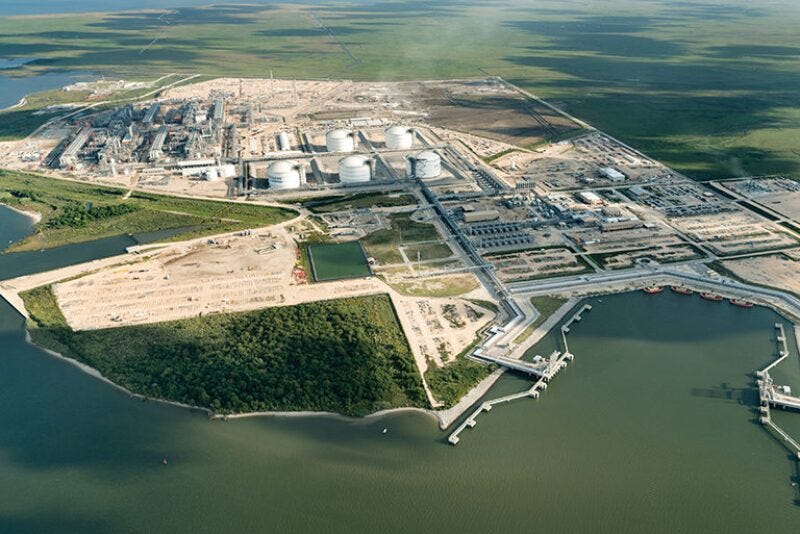
The Oil Case Is Weaker Than It Looks
The Venezuela operation created an instant narrative: regime change equals more oil, more oil equals lower prices. It fits a familiar template. Oil has been the central strategic commodity for a century. Presidents have been willing to spend blood and treasure to influence its flow. The political muscle memory is deep.
But Venezuela can’t simply flip a switch.
Lakshmi Sreekumar, an oil analyst at Capital One, laid out a realistic ramp profile that’s far less cinematic than the headlines suggest. Venezuela could add 300,000 to 500,000 barrels per day in the next three months, then reach 800,000 to 1,000,000 barrels per day within a year, potentially getting to 2 million barrels per day total. That’s meaningful. It would matter at the margin. But the part that gets buried is the scale and time required to get back to anything resembling Venezuela’s historical peak: pushing to 3 million barrels per day would require nearly $100 billion in investments over a decade. That’s field redevelopment, infrastructure, security, and the institutional capacity to run a modern oil sector without the rot that accumulates from years of mismanagement and sanctions.
There’s a nuance that gets simplified in the public debate too. Venezuela’s lifting costs can be lower than US shale once projects are running, but conventional oil projects demand heavy upfront capital and long timelines before a single barrel reaches the waterborne market. Shale can respond faster because it’s modular. Conventional can’t. Even if Caracas becomes friendly to foreign operators overnight, the oil doesn’t teleport to refineries.
That alone should temper expectations. But the bigger reason the oil “supercycle” keeps getting postponed is that oil has a pressure relief system. OPEC sits on roughly 5 million barrels per day of spare capacity. I don’t treat any spare-capacity estimate as gospel because definitions can get squishy, and the real world often tests theoretical capacity. But directionally, the number makes the point: when prices spike and politics demand relief, barrels can come back. Oil has buffers.
Even US shale, often described as being in terminal decline, has been more resilient than the rig count implies. Permian Basin rigs dropped 52 year-over-year to 252. In isolation, that looks bearish for supply. But the Permian has been the graveyard of simplistic models for a decade now. Efficiency gains don’t just come from better rigs. They come from completion techniques, longer laterals, and frack fleet productivity that keep volumes surprisingly stable even as headline rig counts fall.
Then there’s the incentive structure that almost nobody in Washington talks about clearly. Michael Kao, CIO at Akanthos Capital Management, has argued that even with WTI around $56-57 and Brent around $62, public oil CEOs face a perverse constraint: if they cut production meaningfully, markets often punish them. The administration can chant “drill, baby, drill,” but the more revealing reality is that many producers can’t easily stop. They’re managing for shareholder expectations, debt covenants, and the signaling games of public markets. The system is set up to keep barrels flowing even when the economics get thin.
I also kept thinking about how quickly oil policy can backfire. The Trump era already produced a textbook example in late 2018: the US pushed hard on Iranian sanctions, Saudi Arabia increased production, then waivers and policy shifts helped crash prices. The lesson here was that oil is a geopolitical market first and an economic market second, and the rug can get pulled when political incentives shift.
Put those pieces together and the oil case looks weaker than it appears in headline form. Venezuela is a slow build. OPEC has spare capacity. US shale is more elastic than it looks. And public-market incentives don’t neatly align with the story politicians want to tell.
Which leaves a more uncomfortable question: if Washington is spending political capital and operational risk on oil, what is it missing?
The answer, when I followed the energy flows, is that the US has quietly swapped one dependency for another.
The Dependency Swap
For about fifteen years, the American electricity system lived in a strange calm. Demand barely grew. That calm shaped everything: planning assumptions, regulatory posture, and the complacent belief that the grid could absorb almost any policy ambition if you just subsidized enough renewables.
That era is over. Goldman Sachs, drawing on JP Morgan’s “Electrovision” framing, captured the regime change in one stark comparison: US electricity demand grew about 0.5% per year from 2005 to 2020. Expectations have now been revised to roughly 2.5% to 5% growth per decade. That’s a shift from a world where demand is essentially flat to a world where demand growth becomes a central planning variable again.
The part that matters for this story is what the US grid runs on today. According to the Energy Information Administration, natural gas provides 43% of US electricity generation. That dominance was built during the flat-demand era. It’s the baseline. So when you move into a higher-demand world, you’re not starting from a diversified system. You’re starting from a system where gas is already doing the heavy lifting.
When I mapped the new demand drivers, I kept coming back to three pillars. Each one is understandable on its own. The problem is that they’re arriving together.
Electrification is the first. The US is pushing more end uses onto the grid, whether through policy, subsidies, or corporate commitments. Electrification sounds clean in political language because it moves emissions out of the tailpipe and into the power plant stack. But it changes the grid’s job description. The grid no longer just serves traditional load. It has to serve transportation, heating, and industrial processes that used to run on off-grid fuels. And here’s the mechanical catch: wind and solar are intermittent. When the sun sets and demand peaks, something has to fill the gap. That “something” is often gas-fired generation, especially gas peaker plants that can ramp quickly. California’s “duck curve” has become shorthand for this problem: solar floods the grid midday, then drops off just as evening demand rises. The technology story is always that storage will solve it. The operational story is that gas often does.
AI data centers are the second pillar, and this is the demand shock that gets the most attention and the least sober planning. The numbers are big enough to be dismissed as hype, which is precisely why they’re dangerous if they’re even half right. Goldman Sachs projects that data centers could consume 7% to 9% of US power by 2030, describing that as equivalent to the electricity demand of 15 New York Cities. In a separate analysis, Goldman projects data center power demand rising 160% by 2030. Those aren’t incremental loads. Those are grid-shaping loads.
This is where the story stops being about climate virtue and starts being about physics. AI training and inference workloads want high uptime. They want predictable baseload. Intermittent generation can be part of the mix, but it isn’t a substitute for reliability unless you overbuild massively and pair it with storage and transmission that can actually deliver power where it’s needed. Energy analyst Jack Prandelli put the causal direction bluntly: “AI data centers driving nat gas boom.” The phrasing is informal, but the underlying claim matches what I see in procurement behavior. If you need reliable power quickly, you reach for gas.
LNG exports are the third pillar. The US is no longer just a domestic gas market with a little export optionality. It’s becoming a core supplier to allies, and that means domestic prices increasingly feel global pulls. The EIA notes current US LNG export capacity around 16 to 18 billion cubic feet per day, with North America projected to reach roughly 28.7 Bcf/d by 2029. In plain English: the US is on track to roughly double its ability to ship natural gas overseas in a few years. That export pull exists for a reason. After Russia’s invasion of Ukraine, Europe’s gas strategy changed. Pipeline dependence became a security liability. LNG became an emergency substitute, and the US became the marginal supplier. Those contracts and terminals don’t disappear just because the headlines move on.
Now step back and look at the compound effect. Electrification raises baseline electricity demand and increases peak sensitivity. AI data centers add a new class of 24/7 industrial load. LNG exports pull supply out of the domestic system and price US gas against global scarcity.
Michael Kao captured the irony in one line: the US “traded oil/OPEC dependency for nat gas/China rare earths; all roads lead to nat gas.” His point was that the strategic dependency migrated into a commodity with fundamentally different constraints, while the green transition layered on new supply-chain dependencies elsewhere.
The result is a policy conversation that still sounds like 1973, even as the grid starts to look like something entirely new: a gas-dominant system facing a multi-vector demand surge.
The next question is the one policymakers seem least prepared to answer: if gas demand is rising like this, why can’t supply respond the way oil supply does?
Why Gas Can’t Be Fixed Like Oil
Oil is a global commodity because it’s easy to move. You can put it on a tanker, reroute it, blend it, store it, and sell it into a deep global market. That doesn’t eliminate constraints, but it gives the system flexibility. It also gives you swing producers and spare capacity that can be activated when price spikes threaten political stability.
Natural gas is different. It’s provincial. It’s constrained by pipelines, local bottlenecks, and the fact that the molecule doesn’t travel well without expensive processing. In the US, the price you pay for gas can depend as much on where you are as on what global markets are doing, because the constraint is often midstream capacity, not supply in the ground.
LNG is the bridge between provincial gas markets and a global one. But LNG is not a magic wand. It’s an industrial process that imposes a real toll. Kao quantified that toll in a way that makes the constraint obvious: the cost of liquefaction, shipping, and regasification runs roughly $2.50 to $3 per MMBtu, which is 70% to 100% of a Henry Hub price around $3.50. That means global arbitrage is expensive. It’s nothing like oil, where a tanker move can equalize prices quickly. LNG connects markets, but it does so with friction, long-term contracts, and infrastructure that takes years to build.
This is why “just export more” isn’t painless domestically, and why “just import more” doesn’t work the way it might for crude. LNG changes domestic market balance, but it doesn’t create instantaneous global smoothing. It creates a new set of bottlenecks.
Then there’s the spare capacity question. There is no true gas OPEC equivalent that can swing supply rapidly. Qatar is often treated as the closest thing because of its scale in LNG, but even Qatar’s expansions are multi-year projects. In oil, spare capacity can be a policy lever. In gas, the lever is usually construction.
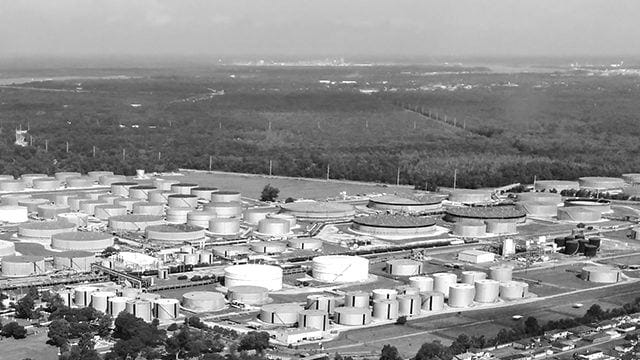
The price history reflects this structural reality. EIA Henry Hub historical data shows that since 1991, Henry Hub has rarely sustained below $2 to $2.50 per MMBtu. I don’t treat that as a law of nature. Recessions happen. Warm winters happen. Demand can disappoint. But that long-term behavior suggests a floor rooted in the economics of production, drilling cadence, and the fact that gas supply can tighten quickly when drilling slows.
Here’s another twist that connects back to the oil story: lower oil prices can tighten gas supply. A large portion of US gas production is “associated gas,” produced as a byproduct of oil drilling in places like the Permian. If oil prices fall far enough that drilling slows, associated gas volumes fall with it. That’s counterintuitive for people who think of oil and gas as separate markets. In reality, the US has tied them together through shale development. The oil market can pull the rug out from under gas supply without anyone in Congress noticing.
Dry gas basins like the Haynesville don’t depend on oil economics in the same way. But that’s precisely the point: the US doesn’t have infinite Haynesvilles. Concentration risk is real when a single basin becomes the marginal supplier for domestic power, LNG exports, and new industrial loads simultaneously.
The most revealing evidence that this isn’t theoretical is what the biggest electricity buyers in the world are actually doing, not what they’re saying.
The Wall Street Journal reported that AI data centers, desperate for electricity, are building their own power plants. The details are almost absurd in their bluntness. xAI deployed 33 natural gas turbines to power a data center. Microsoft is restarting the Three Mile Island nuclear plant. Meta is pursuing a shotgun approach across geothermal, nuclear, and gas. A Grist investigation found hyperscalers collocating near gas-producing regions and going behind the meter to bypass transmission bottlenecks entirely.
I don’t read those moves as a sudden love of fossil fuels. I read them as a confession about timelines and reliability. Nuclear restarts can be faster than greenfield nuclear, but they’re still multi-year projects. Greenfield nuclear can take a decade or more. Geothermal has promise but faces scaling and site constraints. Meanwhile, gas turbines can be deployed on timelines that match the AI build cycle. If you’re a company racing to train models and monetize compute, you don’t get to wait for a perfect grid. As OilPrice.com summarized the core operational reality: “natural gas delivers reliable power for AI.” It’s dispatchable. It’s scalable. It’s already woven into the US power system.
The pattern is the tell. Hyperscalers are not waiting for perfect solutions. They’re building around the constraint. And the constraint is gas.
The Feedback Loop Trump Doesn’t See
I don’t think the administration’s oil focus is irrational. Lower gasoline prices are politically powerful. Oil is still central to transport and inflation psychology. And in a world of tariffs and reshoring, policymakers want every lever they can pull to keep costs down.
But when I connect the dots across oil, gas, and industrial policy, the strategy starts to look internally contradictory.
Start with associated gas. The Permian produces vast amounts of gas as a byproduct of oil drilling. The Department of Energy has described the regulatory landscape around gas flaring and venting, and Kao has highlighted the broader dynamic: in 2014-2015, 3% to 4% of associated gas was flared, a symptom of a system where gas is sometimes treated as waste because the economics are driven by oil.
Now imagine the administration succeeds in pushing oil prices down hard, into the $40s. The political win is obvious. The energy security narrative sounds triumphant. But the drilling response can be brutal. Rigs get laid down. Associated gas declines. And the gas market tightens at the exact moment when electrification, AI, and LNG exports are pulling harder than ever.
Then layer in the administration’s industrial strategy. Kao described tariff-driven reshoring commitments totaling $12 to $13 trillion in headline terms. I don’t take headline commitment numbers at face value; companies announce big figures for political and PR reasons. But even if you haircut those commitments by 70% to 80%, the remainder is still enormous. Factories don’t run on press releases. They run on electricity. So do data centers. So does electrified transport. The “reverse Marshall Plan” vision of rebuilding industrial capacity at home is, at its core, a power demand story.
Now add geopolitics back in. Saudi Arabia has its own incentives and its own memory of being used as a swing producer when it suits Washington and blamed when it doesn’t. The Q4 2018 episode is a reminder that oil markets can be politically flooded. If another rug pull happens, it could lower oil prices further and, again, tighten associated gas supply. The irony compounds: a policy that treats oil as the master lever can end up destabilizing the fuel that actually powers the industrial strategy.
This is the dependency swap in its sharpest form. The US moved from an oil security obsession toward an electrification agenda that was supposed to reduce hydrocarbon dependence. Instead, it increased reliance on a gas system with no swing producer, while also shifting key clean-tech supply chains toward Chinese dominance in rare earth refining. The US didn’t escape hydrocarbons. It rearranged them. And it may have rearranged them into a tighter bottleneck.

What It Means
When I lay the whole system out, I’m left with a straightforward conclusion: the US energy security conversation is stuck in an oil paradigm while the binding constraint has migrated to natural gas.
Oil has buffers. Venezuela is a long-dated optionality story. OPEC spare capacity, estimated around 5 million barrels per day, is a real pressure valve even if the exact number is debated. US shale has proven more elastic than models assume, and public-company incentives keep barrels flowing at prices that look uneconomic on paper.
Natural gas is the opposite profile. It’s pipeline-bound. It’s regionally constrained. LNG can globalize it, but only through an expensive toll of $2.50 to $3 per MMBtu, a huge fraction of a $3.50 Henry Hub. There’s no equivalent of a cartel with spare capacity waiting to stabilize the market. And Henry Hub’s three-decade history, rarely sustaining below $2 to $2.50, hints at a structural floor that becomes more important as demand rises.
The demand side is the real shock. Gas already provides 43% of US electricity. Data centers alone are projected to consume 7% to 9% of US power by 2030. LNG export capacity is projected to nearly double to 28.7 Bcf/d by 2029. And electrification keeps pushing more end uses onto a grid that was designed for a flat-demand world.
I hold one piece of this loosely because it’s genuinely uncertain: AI demand could be a bubble. If data center buildouts overshoot and then collapse, one pillar of the gas squeeze weakens. But even in that world, electrification and LNG exports have independent structural drivers, and the grid is still gas-heavy today. Other uncertainties are real too. It’s not clear whether Venezuela’s political change will stick or whether the investment needed to reach 3 million barrels per day will actually arrive. It’s not clear exactly when the Permian’s production profile turns down or whether efficiency gains keep it resilient longer than expected. And it’s not clear whether nuclear restarts, geothermal, or other firm power sources can compress timelines enough to matter inside a 3-to-7-year window.
But the behavioral evidence is what keeps pulling me back to the gas thesis. Hyperscalers aren’t waiting for perfect solutions. They’re building around the constraint. xAI’s 33 gas turbines, Microsoft’s Three Mile Island restart, Meta’s multi-track pursuit of geothermal, nuclear, and gas: all of it points to the same near-term conclusion. Gas is the time-to-market winner, even for companies that publicly champion renewables.
Who benefits? Dry gas producers, especially those positioned close to Gulf Coast demand centers. Owners of mineral rights in gas-producing regions. LNG infrastructure operators. Firms enabling behind-the-meter power generation for data centers. Natural gas benefits structurally from having no OPEC-style spare capacity backstop.
Who gets pressured? Utilities that built business models around cheap gas-fired generation. Manufacturers in gas-intensive industries like chemicals and fertilizer. European importers paying LNG toll premiums. Any operator assuming sustained sub-$3 Henry Hub pricing is the normal state of the world. Grid-dependent data center operators who didn’t secure firm power arrangements face both cost risk and reliability risk.
A few things would change my view. If Henry Hub sustains below $2 per MMBtu for more than six months, breaking the three-decade pattern, I’d have to reassess the strength of the demand shock. If hyperscalers pivot away from gas toward nuclear or geothermal at scale, with compressed timelines under three years to operation, I’d reassess gas’s near-term dominance. If something like OPEC-style spare capacity emerges in gas, whether through a massive Qatar expansion or a new US basin breakthrough, I’d reassess the “no relief valve” claim. And if electrification, AI, and LNG exports all stall simultaneously, the squeeze thesis weakens dramatically.
Until then, what I expect is not a straight-line price increase. Gas markets rarely move that way. The structure points to a sawtooth: volatility, spikes, pullbacks, but with higher highs and higher lows over a multi-year window if these demand drivers materialize even partially.
The Maduro capture made for good television and better headlines. It might even matter for oil in a decade if Venezuela stabilizes and the investment actually shows up. But the fuel keeping American lights on, powering every AI model being trained, and being shipped to allies as fast as it can be liquefied isn’t crude. It’s methane. There’s no regime to change, no spare capacity to unlock, and no OPEC phone call that fixes a structural gas squeeze on a 3-to-7-year horizon.
The US sent special forces for the wrong molecule.
What do you think is the biggest misconception about America’s energy strategy right now and what would you change?
By the way, I supported your work I’m building my own Substack right now. Let’s support each other, feel free to check mine out too.